Dear colleagues!
We are pleased to announce that a new article on the study of bentonites from the 10th Khutor deposit (Republic of Khakassia, Russia) has been published in the journal Applied Clay Science — "Carboniferous bentonites from 10th Khutor deposit (Russia): Composition, properties and features of genesis".
The full text of the article can be accessed via the link.
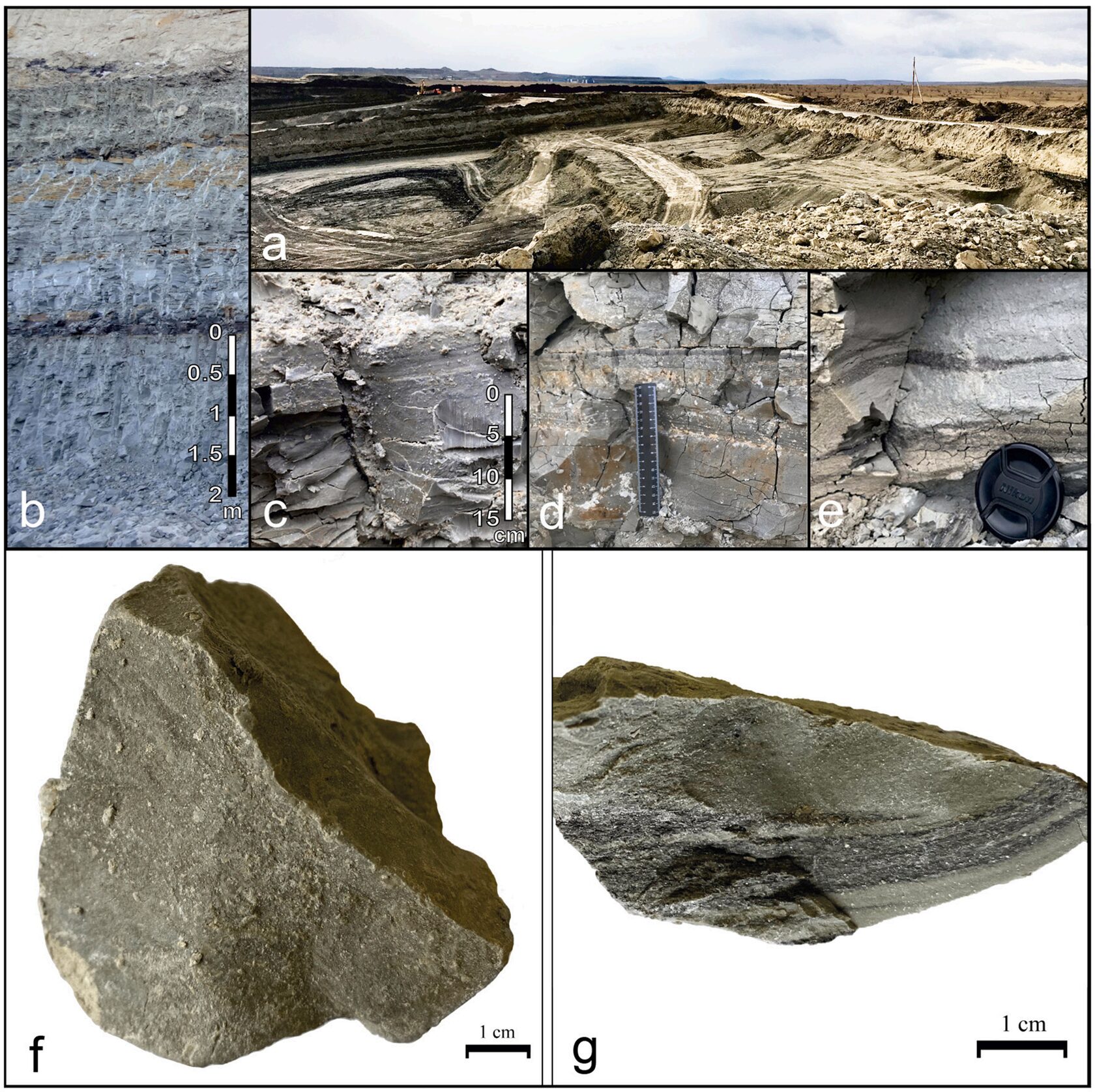
The article focuses on the geological structure, mineral composition, genesis, and industrial properties of the bentonites.
The uniqueness of this deposit lies in the fact that despite its ancient age, the bentonites have not lost their swelling capacity and have not undergone significant illitization. It is shown that the specific formation conditions and the influence of the initial stage of metamorphism have resulted in specific textural and surface properties of the bentonites.
We are pleased to announce that a new article on the study of bentonites from the 10th Khutor deposit (Republic of Khakassia, Russia) has been published in the journal Applied Clay Science — "Carboniferous bentonites from 10th Khutor deposit (Russia): Composition, properties and features of genesis".
The full text of the article can be accessed via the link.
The article focuses on the geological structure, mineral composition, genesis, and industrial properties of the bentonites.
The uniqueness of this deposit lies in the fact that despite its ancient age, the bentonites have not lost their swelling capacity and have not undergone significant illitization. It is shown that the specific formation conditions and the influence of the initial stage of metamorphism have resulted in specific textural and surface properties of the bentonites.
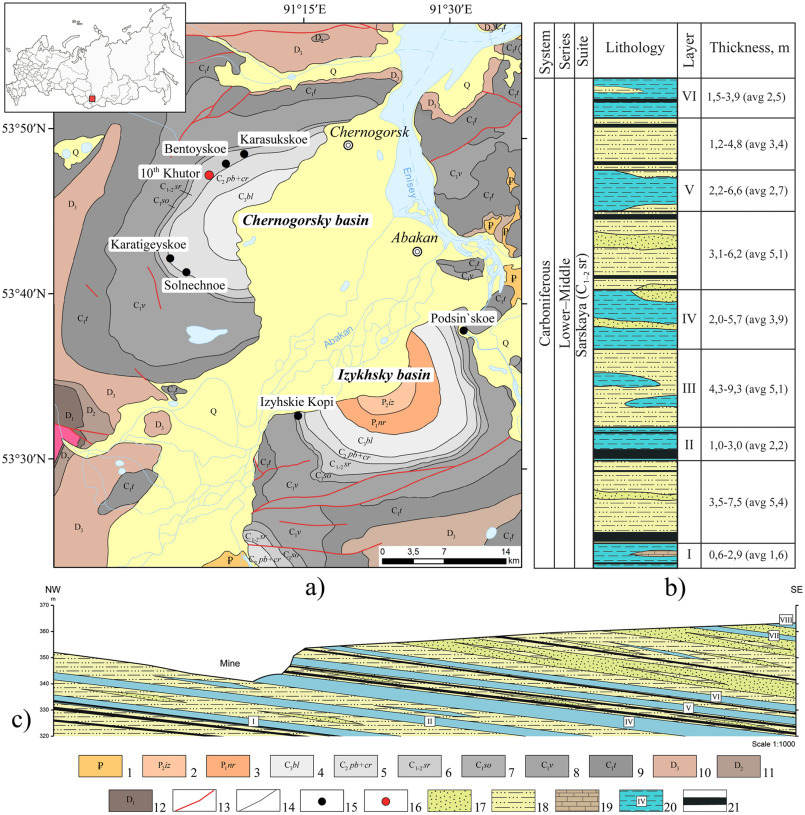
Abstract: This article studies the geological structure, mineralogical composition, genesis and industrial properties of bentonite of the 10th Khutor deposit (Republic of Khakassia, Russia). The deposit is confined to the coal-bearing formation of Carboniferous age and is one of the main sources of bentonite for the metallurgical and foundry industries in Russia. The samples were collected during several field seasons and were studied with XRD, SEM, DTA, XRF, FTIR, BET and CEC analysis. The deposit consists of 6 productive layers with montmorillonite of alkaline-earth type varying in content from 38 to 72%. The formation of bentonites is associated with the alteration of volcanic ash of rhyodacite and dacite composition in zones of shallow sea water — bays and lagoons. The specific conditions of the formation, like an evaporitic depositional environment with high concentrations of soluble salts and burial diagenesis, as evidenced by seams and packs of hard coal, affected the textural and surface properties of the bentonite and caused the observed low microporosity and limited illitization.
Keywords: bentonite, montmorillonite, genesis, volcano-sedimentary rocks, diagenetic alteration, volcanic glass.
Cite the article: P. Belousov, N. Chupalenkov, G.E. Christidis, O. Dorzhieva, S. Zakusin, I. Morozov, M. Chernov, T. Zaitseva, E. Tyupina, V. Krupskaya. Carboniferous bentonites from 10th Khutor deposit (Russia): composition, properties and features of genesis. Applied Clay Science. 2021, 2015, 1–14.
Keywords: bentonite, montmorillonite, genesis, volcano-sedimentary rocks, diagenetic alteration, volcanic glass.
Cite the article: P. Belousov, N. Chupalenkov, G.E. Christidis, O. Dorzhieva, S. Zakusin, I. Morozov, M. Chernov, T. Zaitseva, E. Tyupina, V. Krupskaya. Carboniferous bentonites from 10th Khutor deposit (Russia): composition, properties and features of genesis. Applied Clay Science. 2021, 2015, 1–14.