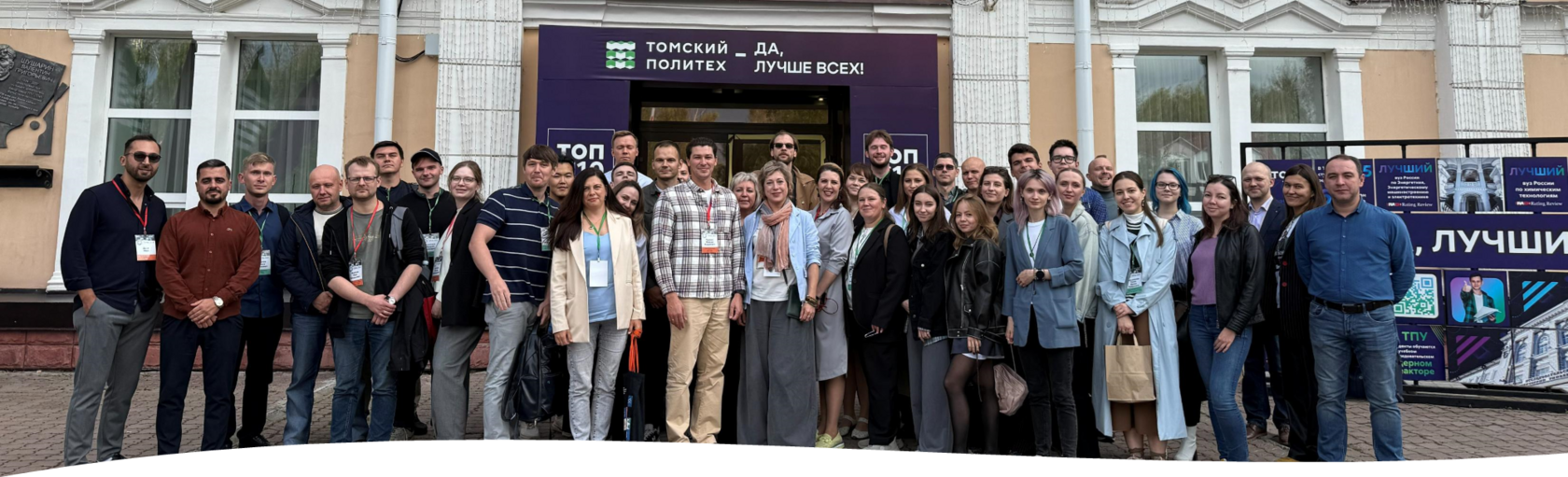
Brief summary of the event
- 5‑day programme: 2 days of scientific school + 3 days of conference
- 87 registered participants from 22 cities of Russia + Belarus + Serbia
- 3 plenary lectures, 40 oral presentations, 18 poster presentations
- Single session of talks → interdisciplinary interactions
- Main topics: crystal chemistry, diagnostics, properties, ecology, barrier materials, modelling, oil & gas
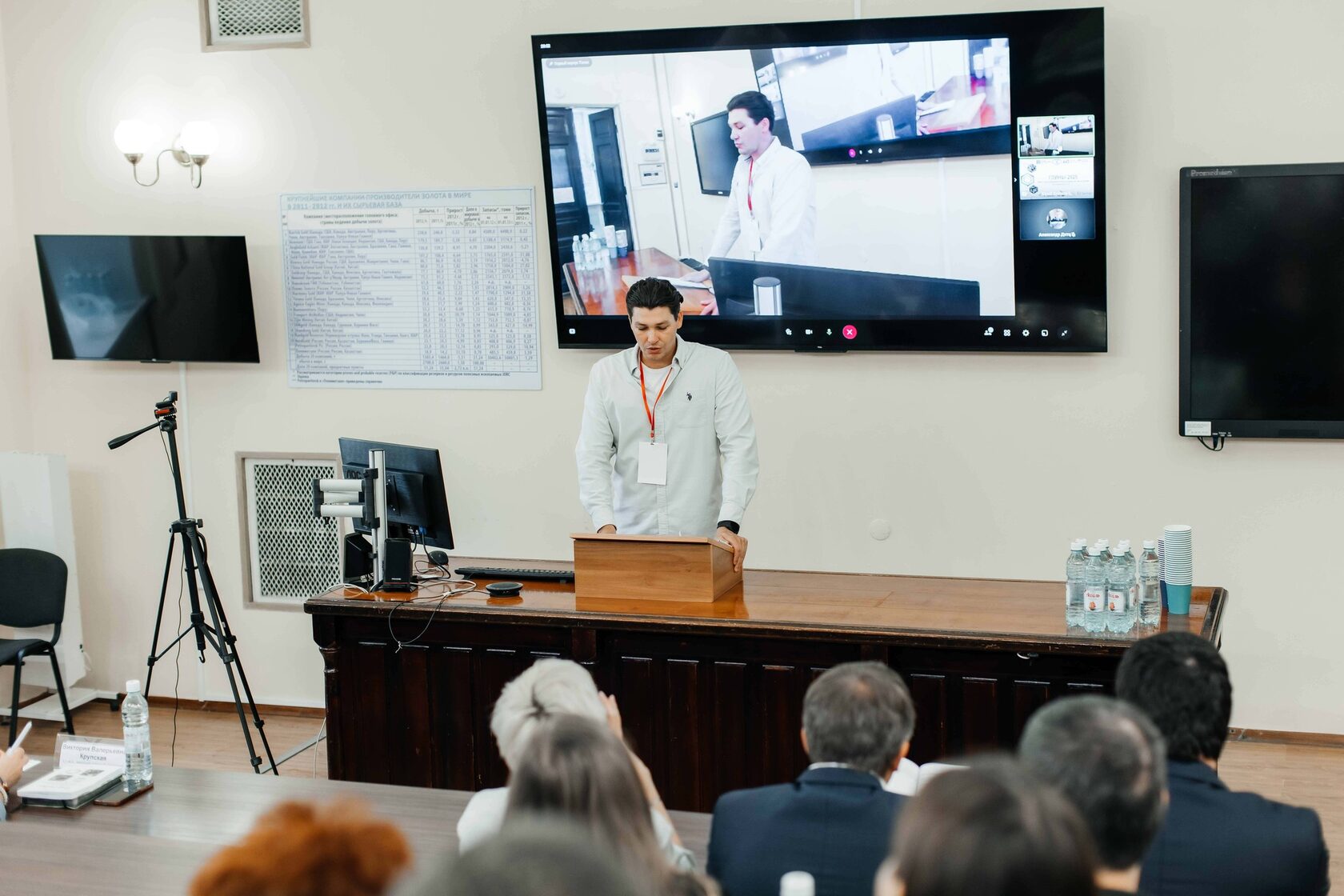
Day 1. Scientific school – lecture day
Lecture block for early‑career researchers and PhD students
The first day's programme included a series of tutorial lectures on the basics of clay mineral diagnostics and analytics: sample preparation, X‑ray diffraction, spectroscopy, questions of classification and nomenclature.
The school presented real research case studies, discussed methods for separating minerals from complex natural samples, approaches to interpreting diffractograms and the combination of techniques, as well as specific aspects of working with glauconite, amorphous phases and approaches to discovering new minerals.
The first day's programme included a series of tutorial lectures on the basics of clay mineral diagnostics and analytics: sample preparation, X‑ray diffraction, spectroscopy, questions of classification and nomenclature.
The school presented real research case studies, discussed methods for separating minerals from complex natural samples, approaches to interpreting diffractograms and the combination of techniques, as well as specific aspects of working with glauconite, amorphous phases and approaches to discovering new minerals.
Day 2. Scientific school – ROSNEFT "TomskNIPIneft" JSC
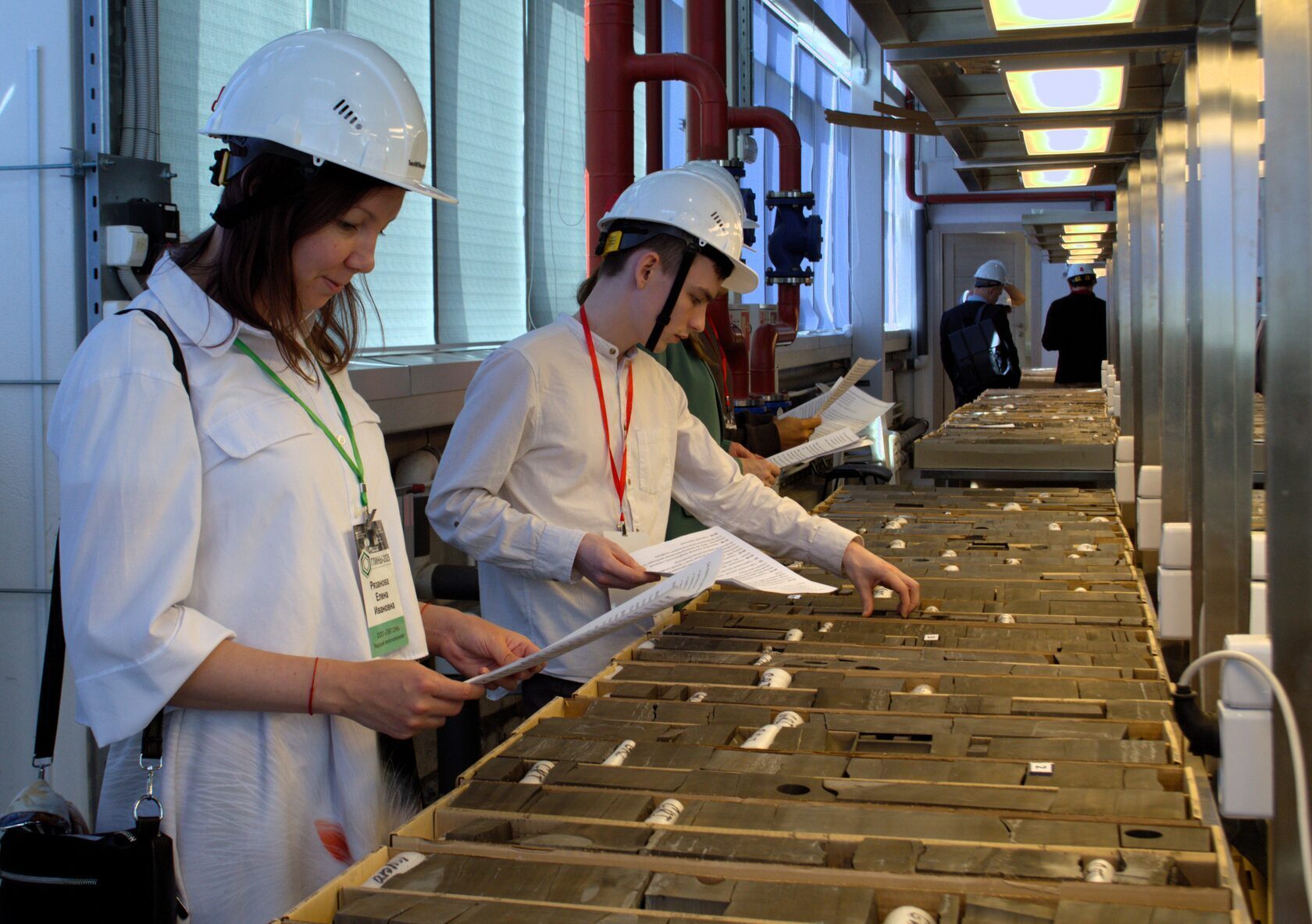
The second day was entirely practice‑oriented and took place at a leading industrial institute for oil‑and‑gas geology – TomskNIPIneft JSC.
Participants worked through a "mineralogical quiz" to determine the composition of an unknown sample, then visited specialised laboratories: the core storage and lithology laboratory; the X‑ray powder diffraction laboratory; the analytical facility for sample preparation and data interpretation; the petrophysics laboratory, and others.
At the end of the school, the launch of the first all‑Russian competition for quantitative analysis of clay minerals (analogous to the Reynolds Cup) was announced.
Participants worked through a "mineralogical quiz" to determine the composition of an unknown sample, then visited specialised laboratories: the core storage and lithology laboratory; the X‑ray powder diffraction laboratory; the analytical facility for sample preparation and data interpretation; the petrophysics laboratory, and others.
At the end of the school, the launch of the first all‑Russian competition for quantitative analysis of clay minerals (analogous to the Reynolds Cup) was announced.
Day 3. Conference opening and plenary lectures
The official opening of the conference was attended by the Rector of TPU and the leadership of the School of Earth Sciences & Engineering. The opening was accompanied by messages from the sponsors (INSCAN LLC and SNK PVP).
The plenary session included three key talks reflecting current directions in clay‑rock mineralogy:
The plenary session included three key talks reflecting current directions in clay‑rock mineralogy:
- S. M. Aksenov – Structure and stoichiometry of palygorskite‑sepiolite series minerals
- I. N. Semenkov – Technobiogeomes and mineral formation at sites of accumulated environmental damage at Baikonur
- M. V. Slukovskaya – Influence of landscape factors on the efficiency of soil remediation using composite clay materials
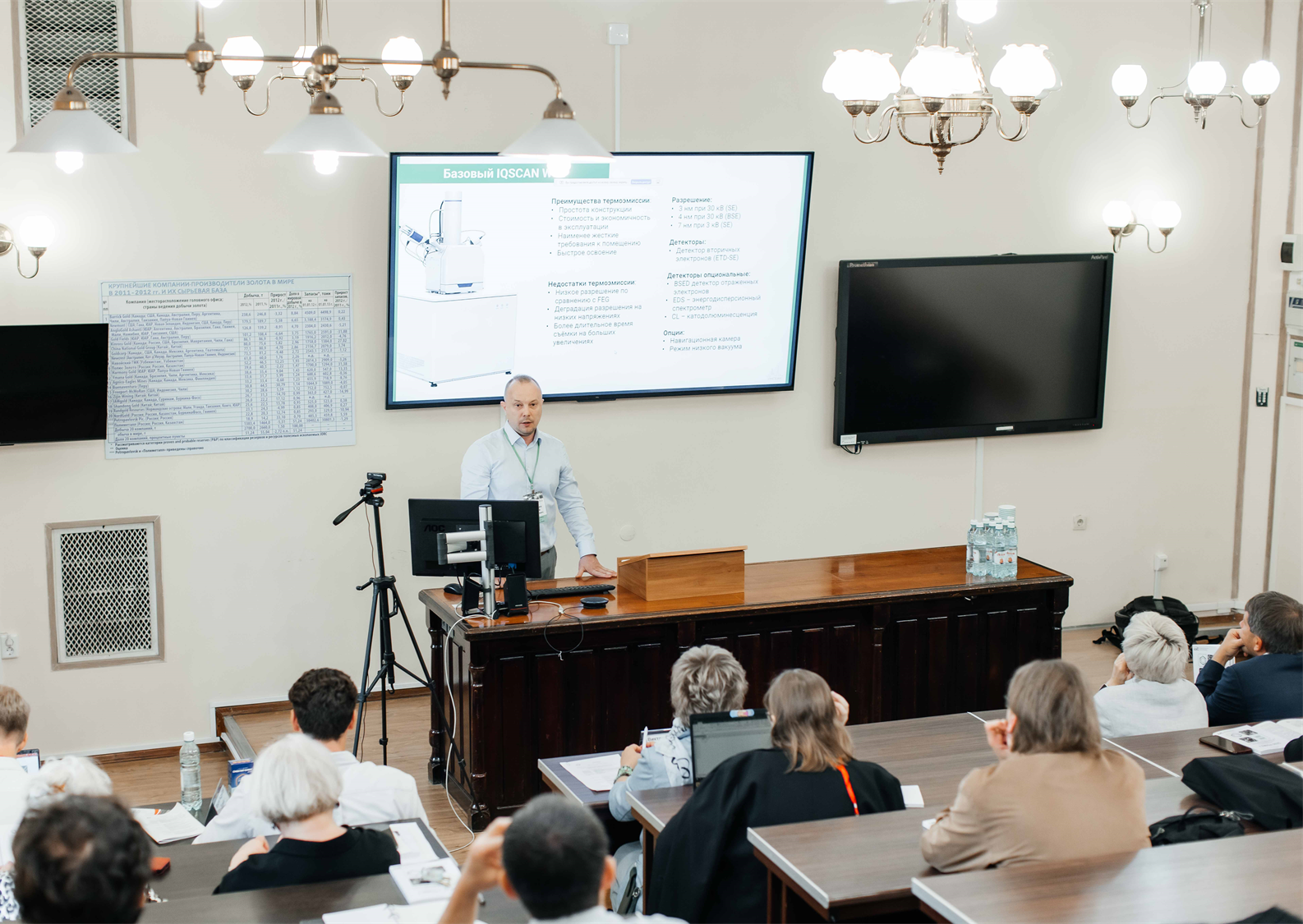
Session 1. Crystal chemistry and structural features of clay minerals and layered materials
This session was devoted to fundamental issues of crystal chemistry, structural ordering and modification of clay minerals. Speakers presented research results on:
Special attention was paid to methods: XRD, TG‑DTA, IR spectroscopy.
- structural transitions in layered silicates under thermal and chemical treatment;
- ion‑exchange mechanisms in titanosilicate and aluminosilicate systems;
- experimental data on the polymorphism of clay particles.
Special attention was paid to methods: XRD, TG‑DTA, IR spectroscopy.
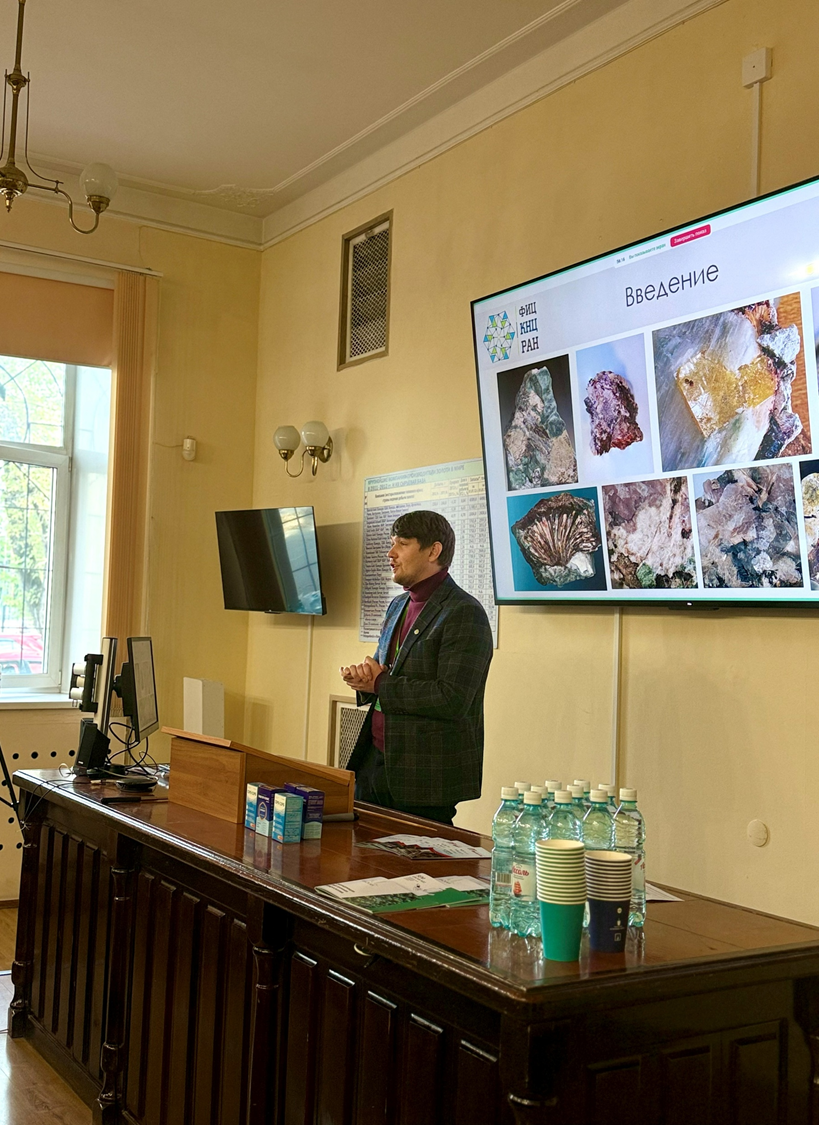
Session 2. Geology, mineralogy, geochemistry and genesis of clays
This session was devoted to the origin, formation conditions and geochemical characteristics of clay minerals in various geological settings. Processes of diagenesis, weathering and sedimentation leading to the formation of kaolinites, smectites and chlorites were considered, as well as the factors controlling their chemical and isotopic composition.
Particular attention was given to the role of clays as indicators of palaeoenvironments and as sources of information on the thermodynamic conditions of sedimentation. Talks covered the mineral composition of the clay fraction of the Bazhenov Formation, patterns of authigenic mineral formation, and the influence of water composition on the structure of sedimentary minerals.
The results presented help refine facies and palaeogeographic models of sedimentation.
Particular attention was given to the role of clays as indicators of palaeoenvironments and as sources of information on the thermodynamic conditions of sedimentation. Talks covered the mineral composition of the clay fraction of the Bazhenov Formation, patterns of authigenic mineral formation, and the influence of water composition on the structure of sedimentary minerals.
The results presented help refine facies and palaeogeographic models of sedimentation.
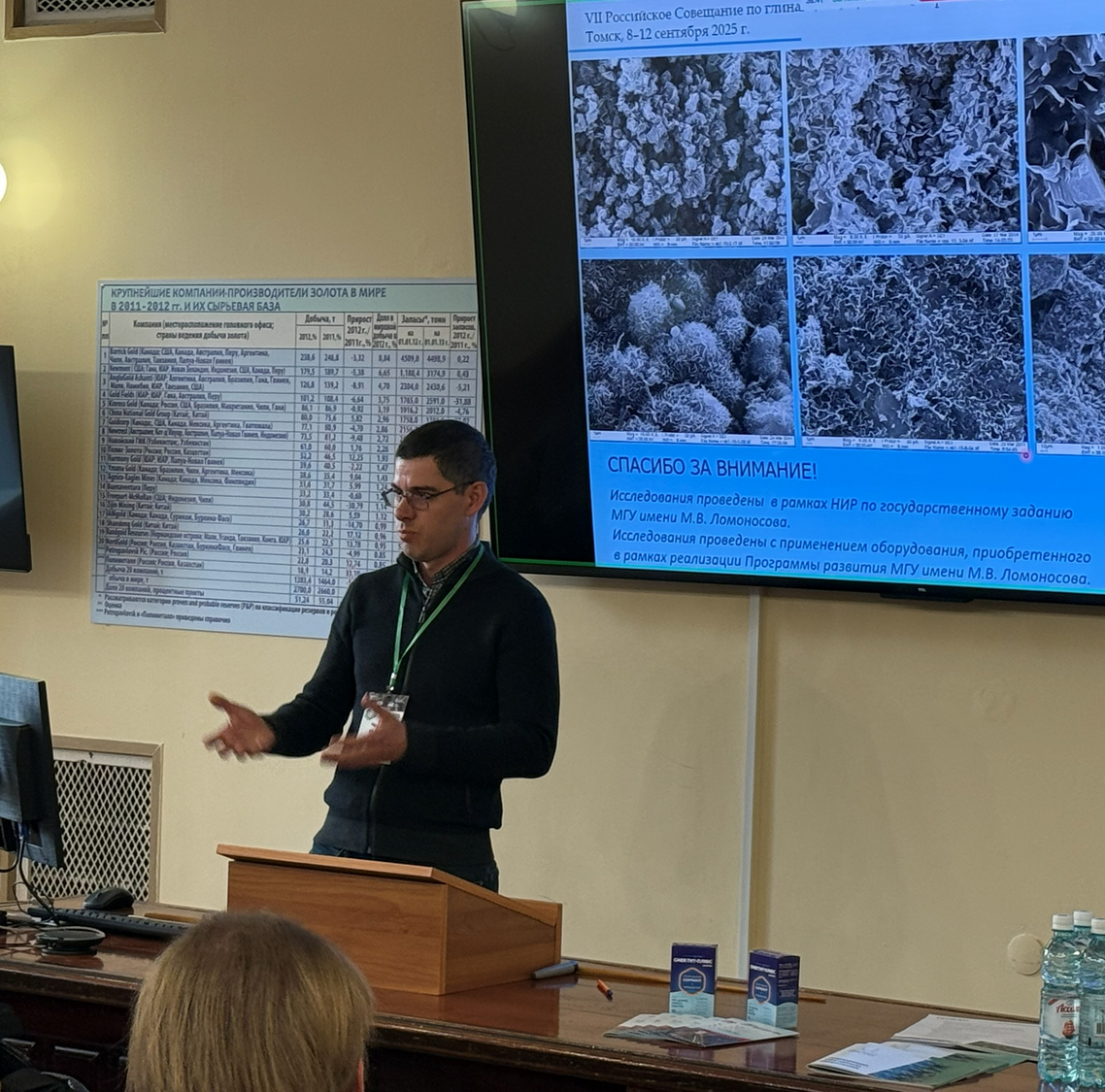
Session 3. Properties of clays and layered materials, their industrial applications
This session brought together research on the physico‑chemical properties of clays and directions for their practical use in various industries. Talks covered a wide range of issues:
Particular attention was given to the development of composite and nanostructured materials based on smectites, glauconite and kaolin with enhanced sorption and catalytic activity. The talks showed that understanding the microstructure and mechanical properties of clays is directly linked to the efficiency of their industrial use.
- plasticity, porosity and thermal resistance of natural and modified clays;
- rheology and structural changes during hydration and drying;
- use of clays in geopolymers, drilling and grouting fluids, building materials and sorbents.
Particular attention was given to the development of composite and nanostructured materials based on smectites, glauconite and kaolin with enhanced sorption and catalytic activity. The talks showed that understanding the microstructure and mechanical properties of clays is directly linked to the efficiency of their industrial use.
Poster session
The poster session brought together 25 studies presented by young scientists, PhD students and research groups from universities, academic institutes and industrial laboratories.
The works covered a wide range of topics: clay geology, experimental mineralogy of clay phases, structural modification to increase sorption capacity, environmental technologies based on bentonites and glauconites, modelling, and others.
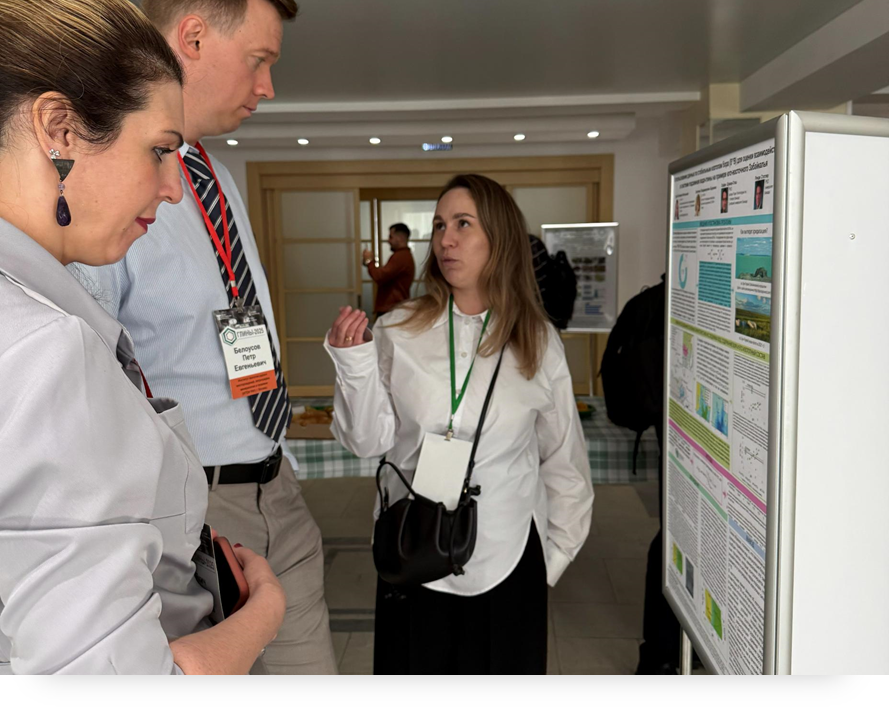
The "live poster" format allowed for in‑depth discussion of results, exchange of contacts and formation of new research links. At the end of the session, a participant survey was conducted, the best posters were identified, and works with original methodology and high practical potential were recognised.
The works covered a wide range of topics: clay geology, experimental mineralogy of clay phases, structural modification to increase sorption capacity, environmental technologies based on bentonites and glauconites, modelling, and others.
The "live poster" format allowed for in‑depth discussion of results, exchange of contacts and formation of new research links. At the end of the session, a participant survey was conducted, the best posters were identified, and works with original methodology and high practical potential were recognised.
Session 4. Environmental use of clay minerals and layered materials, including for toxic waste disposal
This session was devoted to the application of clay minerals in environmental safety, remediation of contaminated media, and the creation of engineered barriers for the isolation of industrial and radioactive waste.
Topics included sorption mechanisms for binding radionuclides (Cs, Sr, I, U) by natural and modified clays, the influence of cation exchange and interlayer structure on pollutant retention, and the long‑term behaviour of barrier materials in contact with groundwater and corrosive solutions.
Talks included examples of the use of bentonites, glauconites and layered‑silicate composites in deep radioactive waste disposal systems.
The research showed that clays are a key component of multibarrier protective systems and have significant potential for further engineering optimisation.
Topics included sorption mechanisms for binding radionuclides (Cs, Sr, I, U) by natural and modified clays, the influence of cation exchange and interlayer structure on pollutant retention, and the long‑term behaviour of barrier materials in contact with groundwater and corrosive solutions.
Talks included examples of the use of bentonites, glauconites and layered‑silicate composites in deep radioactive waste disposal systems.
The research showed that clays are a key component of multibarrier protective systems and have significant potential for further engineering optimisation.
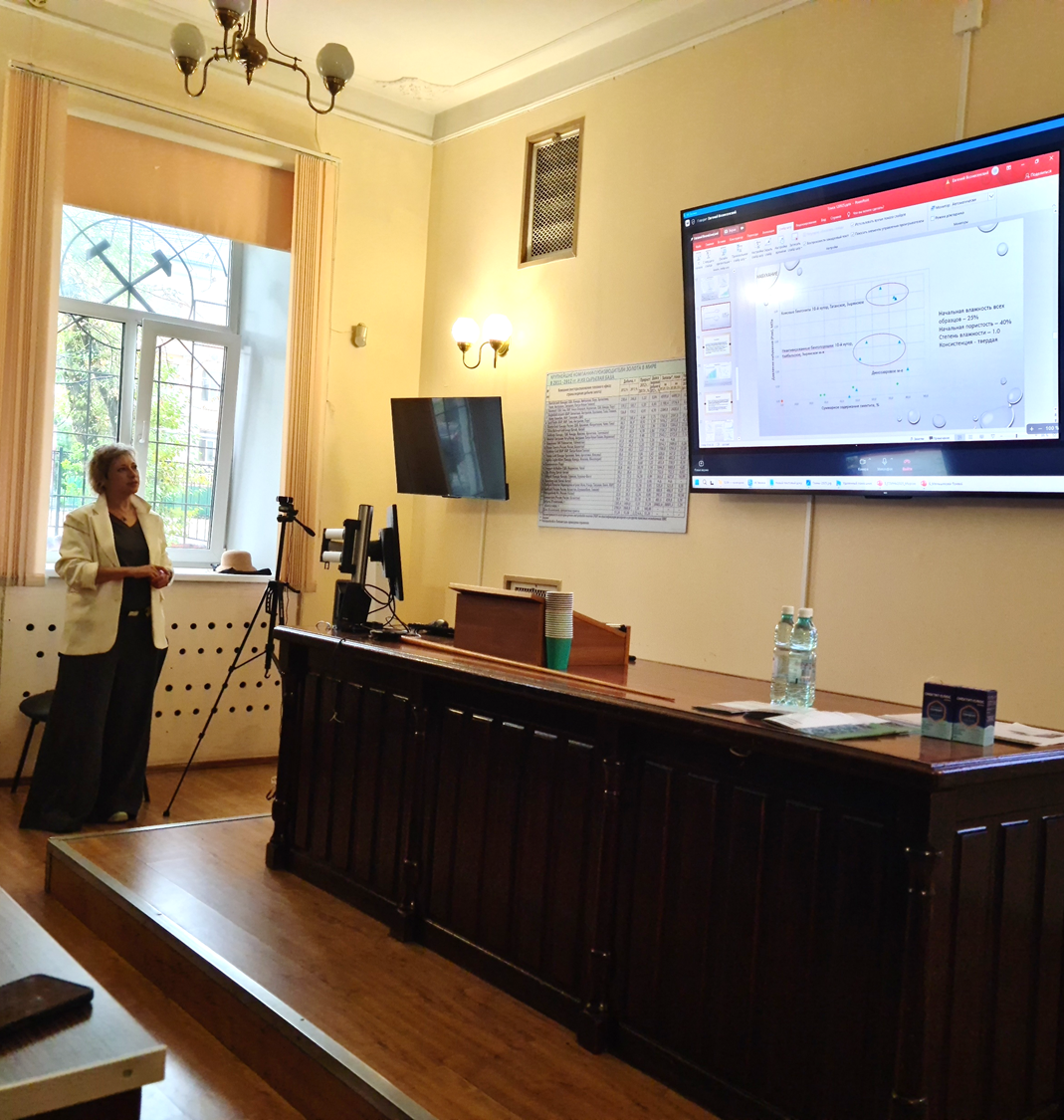
Session 5. Computer modelling and artificial intelligence in clay mineral and layered material science
This session presented current directions in computational mineralogy and the application of atomistic modelling methods to study the structure, properties and behaviour of clay minerals.
Talks covered a wide range of topics: predicting the sorption capacity of modified clays using machine learning, modelling the coordination states of U(VI) on smectites, computational methods for assessing the durability of bentonite barriers.
The session demonstrated a growing interest in integrating classical mineralogy with digital methods and computational technologies.
Talks covered a wide range of topics: predicting the sorption capacity of modified clays using machine learning, modelling the coordination states of U(VI) on smectites, computational methods for assessing the durability of bentonite barriers.
The session demonstrated a growing interest in integrating classical mineralogy with digital methods and computational technologies.
Field trip – weathering crust outcrops
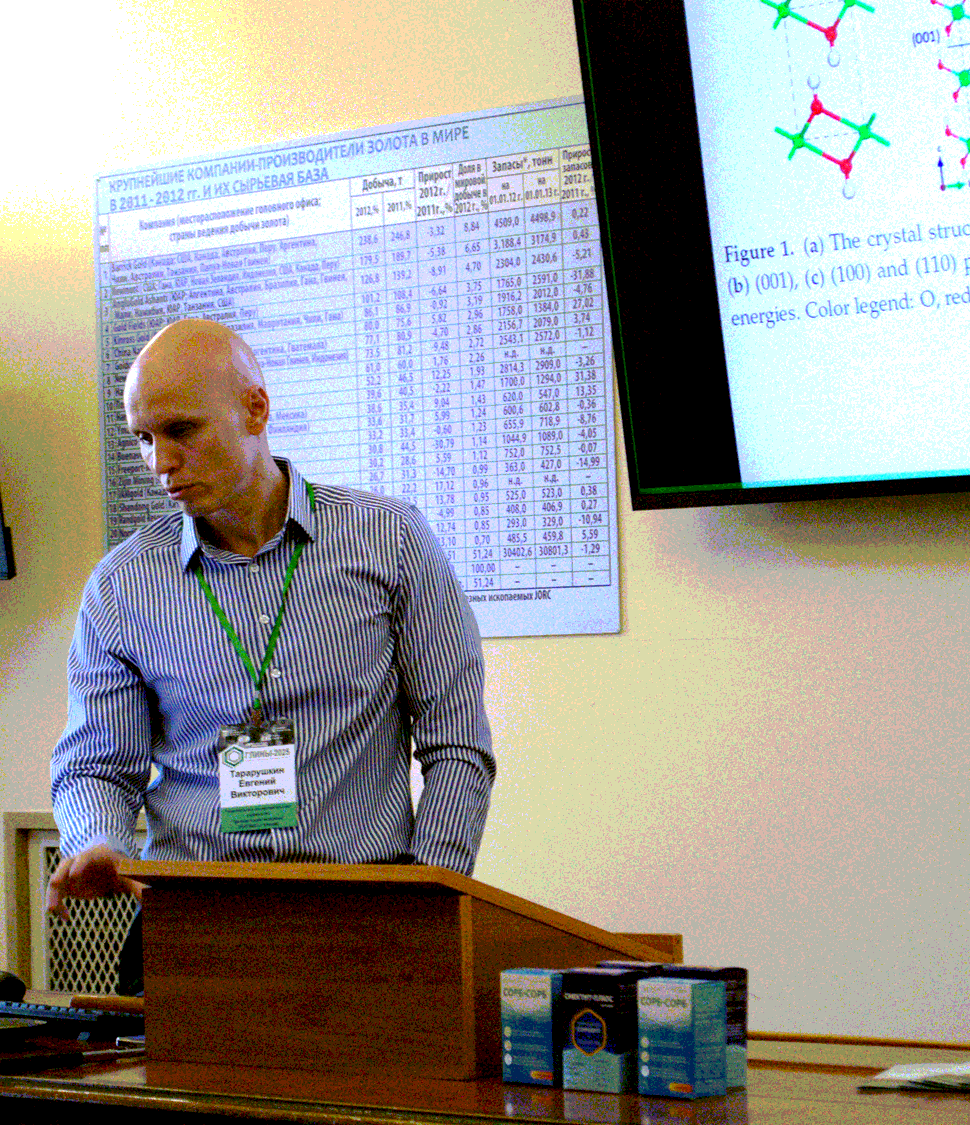
The field trip concluded the scientific programme of the conference and was devoted to studying the weathering crust with natural exposures of clay rocks.
The route included two locations with pronounced vertical zonation: upper horizons with kaolinisation and iron depletion, middle zones dominated by chlorite and illite, and lower horizons with primary aluminosilicates.
Despite challenging weather conditions and a steep climb on the final part of the trail, the excursion was completed in full, combining educational, research and team field work.
The route included two locations with pronounced vertical zonation: upper horizons with kaolinisation and iron depletion, middle zones dominated by chlorite and illite, and lower horizons with primary aluminosilicates.
Despite challenging weather conditions and a steep climb on the final part of the trail, the excursion was completed in full, combining educational, research and team field work.
Best early‑career presentations at the "CLAYS‑2025" conference
Based on expert voting by the programme committee, the best early‑career research presented in oral and poster form was recognised.
🏆 Winner of the award for best oral presentation
🏆 Top 3 oral presentations
📌 Best poster presentations
🏆 Winner of the award for best oral presentation
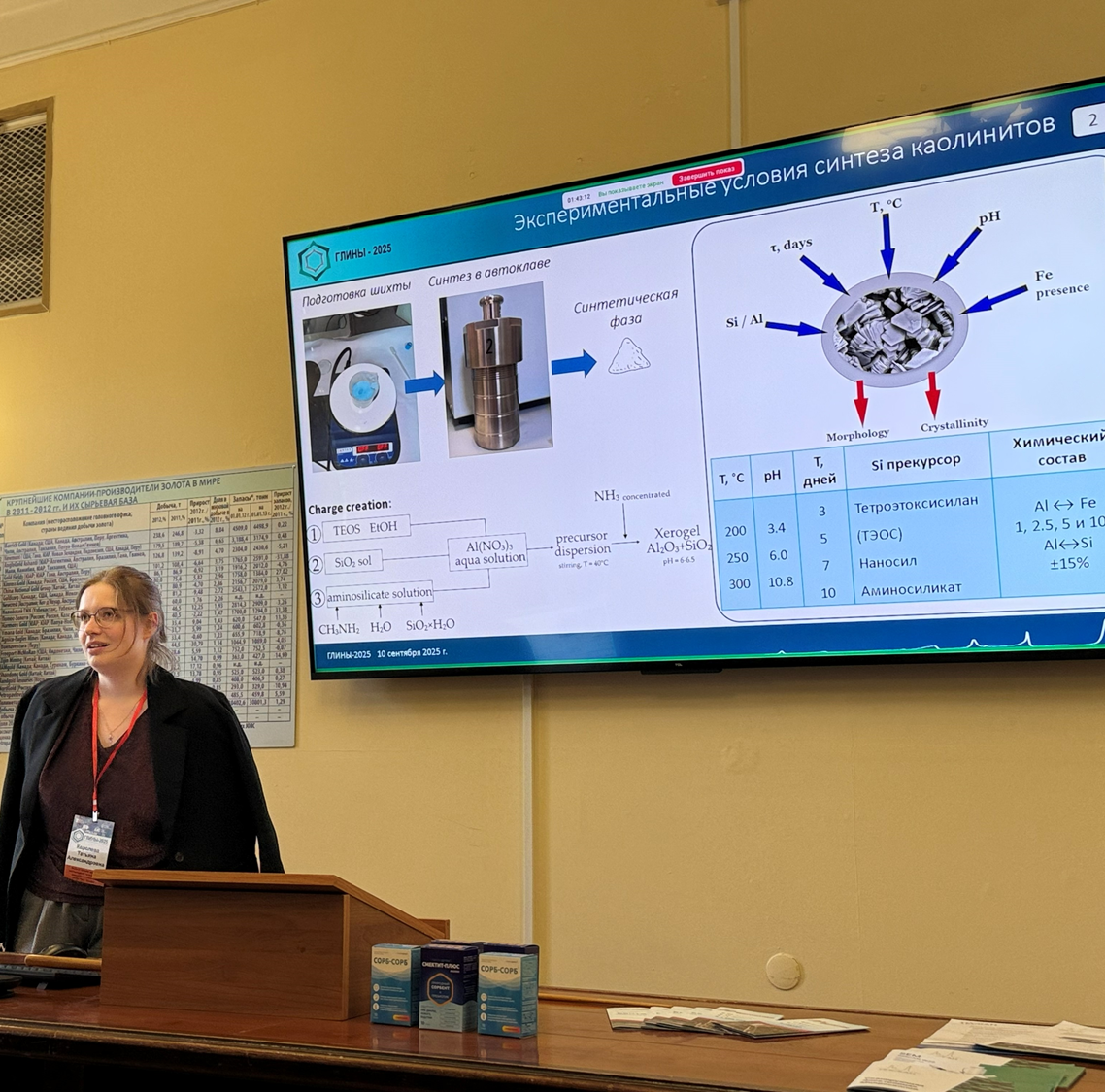
- T. A. Koroleva. Influence of synthesis conditions on the formation of kaolinite‑group minerals
🏆 Top 3 oral presentations
- A. A. Alekseev. Production of geopolymer materials based on natural clay minerals
- A. M. Lebedeva. Study of halopelite interlayers in the productive sequence of the Verkhnekamskoye deposit
- I. R. Menshikova‑Tonjan. Sorption of caesium and strontium on bentonite clays from different deposits
📌 Best poster presentations
- P. P. Kozlov. Study of iodide‑anion diffusion through compacted bentonite samples modified with metallic silver
- P. N. Maksimov. Natural nanocontainers based on halloysite for the production of micronutrients / fertilisers
Continuation and future events
The results of "CLAYS‑2025" confirmed the high demand for a regular meeting format and the Argilla Studium scientific school, focused on fundamental and applied research of clay minerals.
Plans include:
Plans include:
- holding an all‑Russian competition for quantitative analysis of clay minerals analogous to the Reynolds Cup;
- expansion of the thematic scope;
- formation of a working group for data and personnel exchange between universities, research centres and industrial laboratories;
- holding the next conference and school in 2027 in Moscow, hosted by IGEM RAS.