Dear colleagues,
this is a sad note from Georg Grathoff and his colleagues:
this is a sad note from Georg Grathoff and his colleagues:
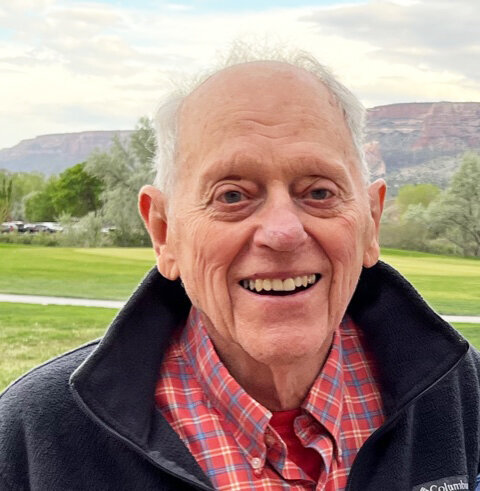
It is with great sadness that I share the news that Duwayne (Dewey) Moore passed away on October 18, 2024.
Below is a brief memorial for Dewey, written by Rob Lander, Jay Matthews, and myself, with help from Dennis Eberl, Linda Williams, Paul Schroeder, and Shelly Roberts.
Duwayne (Dewey) M. Moore
February 17, 1933 – October 18, 2024
President of The Clay Minerals Society, 2005
We have lost one of the most renowned scientists, teachers, and historians in the field of clay research. Dewey was born in Rochelle, Illinois, during the Depression, the eldest of six children. Despite poverty and difficult family circumstances, he managed to study for two years at Beloit College, working on farms for room and board and at a foundry. He transferred to the University of Illinois at Urbana-Champaign, thinking he would become a high school biology teacher. However, mineralogy professor Don Henderson changed his career path. In six years, Dewey earned three degrees in geology. To support his studies and family, he worked in a boarding house, milked cows, sold water softeners, worked at the football stadium, and was a lab assistant at the Illinois State Geological Survey – unthinkable by today's standards. His 1963 doctoral dissertation on the White Pine district in eastern Nevada focused on the clear link between clay mineralogy and the accumulation of trace metals.
In 1964, Dewey moved to the Geology Department at Knox College, a small liberal arts college, and taught there for 24 years, serving as department chair for 10 years. Despite the department having only three faculty members, it ranked 6th among institutions for the number of graduates who went on to earn PhDs, including us. At the heart of his teaching were field trips, mineralogy, problem-solving, and answering student questions through research. Dewey's interest in applying a geological perspective to the "human-nature" debate attracted many geology students. Student groups investigated issues of waste disposal, pollution and water protection, soil resources and erosion, energy and air pollution, radioactive waste, geological hazards, as well as food and the "green revolution." Dewey set up telephone conference equipment so students could interview scientists with opposing views. He involved us in his research and motivated us to complete honors projects.
During a sabbatical in 1980, arranged by John Hower, he shared an office with "a crazy guy who rode a motorcycle to Urbana... from New Hampshire... in March" – Robert (Bob) Reynolds. This led to a long intellectual friendship and an increased focus on the two-dimensional modeling of the structure of layer silicates. Dewey's Fulbright proposal to Pakistan in 1984–85 emphasized the suitability of X-ray diffraction for developing countries – simple preparation methods, straightforward maintenance, and important clay mineralogy insights into soil and sediment properties. While in Pakistan, Dewey prepared a 4-day short course on X-ray diffraction, clay mineralogy, and its applications. This short course became the foundation for a book that combines theoretical discussions of clay mineralogy with recipes for X-ray diffraction laboratory procedures. A ready-to-publish, spiral-bound book was prepared for an audience of upper-level undergraduates. The publisher sent the manuscript to Bob Reynolds for review, and Dewey discovered that Bob had always intended to write such a book. Over 14 days during the winter break at Dartmouth, they sat back-to-back, each on a Macintosh, each working on a separate chapter. They wrote and exchanged text, checking each other's clarity and consistency of tone, taking breaks only to watch Celtics basketball games. Thus, they became co-authors of a highly cited textbook on clay minerals: two editions of X-Ray Diffraction and the Identification and Analysis of Clay Minerals (Oxford Press, 1989, 1997).
In 1987, Dewey joined Herb Glass and Randy Hughes at the Illinois State Geological Survey (ISGS), where he retired as a Senior Mineralogist in 2001. Dewey's primary research interests included the diagenesis of clay minerals in shales and sandstones, the illitization of smectites, changes in soil mineralogy due to cultivation, using mineralogy to decipher geological history, and the history and teaching of geology and clay mineralogy. Dewey supported graduate student research using nuclear magnetic resonance spectroscopy and served on dissertation committees. He also enjoyed investigating interdisciplinary problems. He participated in hazardous waste and fly ash research and collaborated with the Brookfield Zoo, examining intestinal fragments to identify minerals in animal diets. He collaborated with archaeologists to determine cultural interactions in space and time. Dewey's latest research interest led him to farming. Together with Bruce Velde, a classmate from university, he studied the human impact on the alteration of clay minerals in soil and what this could tell us about sustainability. After retiring, Dewey moved with his wife, Shelly Roberts, to Albuquerque, where he received invitations to conduct short courses from around the world, including Argentina, Indonesia, and New Zealand. Dewey's last X-ray work was done at the University of New Mexico in Albuquerque as an Adjunct Professor in the Department of Earth and Planetary Sciences.
Dewey's professional activity was primarily tied to The Clay Minerals Society (CMS), where he was called the "Renaissance Man of CMS" because of the breadth of his knowledge and interests. He served on nomenclature and source clays committees and held numerous positions in CMS, including Council Member, Historian, CMS Meeting Organizer (Santa Fe, 2005), and President (2004–2005). His project of interviewing as CMS Historian and the 50th-anniversary symposium highlighted how life stories, cultural context, and intellectual genealogy shape research directions. In 2000, he received the Brindley Lecture Award, and in 2018, a Special Recognition Award. Unofficially, Dewey and Bob Reynolds founded the "Friends of Illite" (including illite-smectite), organizing "Friends of Illite" meetings at CMS gatherings that included a bottle of whiskey supplied by Dewey. Anyone who studied illite and illite-smectite was invited, including students, who were encouraged to bring their diffractograms to share and discuss with leading mineralogists. Dewey valued community, mentorship, and serendipity.
Beyond his interest in mineralogy, Dewey loved being in the field and exploring landscapes. He had an amazing ability to vividly describe the geological context of a landscape, inspiring awe in people from all walks of life. For us, as for many others, being in the field or in the lab with Dewey not only changed our view of the world but also changed our life trajectories. A raft trip through the Grand Canyon, along with numerous trips to the Colorado Plateau with Shelly, inspired his final contribution: a historical-fiction novel, Death on the North Slope (2019), written in celebration of the centennial of John Wesley Powell's exploration of the Grand Canyon.
We will miss this unassuming man who nurtured our curiosity and abilities. Dewey is survived by three children, seven grandchildren, 14 great-grandchildren, three brothers, and his wife. Shelly, a fellow educator, accompanied him to many CMS meetings and shared his love of nature and commitment to land ethics. In keeping with his drive to teach, share, and preserve, Dewey donated his brain to the University of New Mexico for dementia research. A biodegradable urn, placed on their farm in southern Wisconsin, will return him to the soil, where he will mingle with his dear friend, Illite-Smectite.
Georg Grathoff
Rob Lander
Jay Matthews